A buyer who has spent six months looking at Carmel and Westfield new construction walks into a Washington Boulevard foursquare and sees the same list price on a house with more character, more mature trees, and a shorter commute to downtown. What they usually miss is the second number: the reserve fund the older house is quietly asking them to open on day one. That gap between sticker price and true carrying cost is the story of Meridian-Kessler in 2026, and it is the number the portals will not show you.
Most guides to the neighborhood stop at the median. This one starts where the median stops.
The median tells you the ticket, not the reserve
Meridian-Kessler sits inside Indianapolis proper but reads like a small city of its own, with defined boundaries of 38th Street south, Kessler Boulevard East Drive north, Meridian Street west, and the Monon Trail east, and roughly 6,000 homes and 18,000 residents inside them. The pricing across those blocks looks like this in mid-2026:
| Snapshot | Median price | Days on market | Window |
|---|---|---|---|
| Meridian-Kessler | $475,000 | 26 | Feb 2026, Redfin data cited by outside brokerages |
| Meridian-Kessler | $387,450 list, 48 listings | 36 avg | June 26, 2026, IndyHomes MLS snapshot |
| Meridian-Kessler | $465,000, up 9% YoY | 37 | Trailing twelve months, Homes.com |
| Broad Ripple | $314,100 | 40 | Feb 2026, Redfin data cited by outside brokerages |
| Indianapolis city | ~$255,000–$260,000 | 28–49 | Q2 2026, multiple aggregators |
| Central Indiana, 16-county | $323,250 record | 16 | June 2026, MIBOR via WISH-TV |
Read the top line honestly and you get the F.C. Tucker realtor Timothy Birky characterization that Meridian-Kessler is the most in-demand neighborhood in the entire city, with typically large, historic homes and very little new construction. Read the second and third lines and you also get the punchline: at any given moment there are only a few dozen active MK listings, and the ones that show well move in about four weeks while the deferred-maintenance houses sit at a discount.
The trap for a move-up buyer coming from Hamilton County is treating a $475,000 Meridian-Kessler foursquare and a $475,000 Westfield new build as equivalent transactions. They are not. One of them ships with a maintenance liability that a national brokerage checklist will not surface until the inspection period, which is exactly when the buyer has the least leverage to renegotiate.
What the walls hide in a 1925 foursquare
Meridian-Kessler saw its most rapid development in the 1920s and 1930s, producing a housing stock that ranges from American Foursquares south of 44th Street to bungalows east of College Avenue and Colonial Revival, Tudor Revival, and Classical Revival homes west of it. The architecture is the reason people move here. The building systems are the reason they should budget carefully.
An inspection stack for a typical pre-1940 MK house looks nothing like the punch list for a Westfield home built last year. The findings that turn up repeatedly:
- Electrical. Cloth-insulated or knob-and-tube wiring in unrenovated pockets, which can trigger insurance and lender questions before it triggers a safety one.
- Plumbing. Galvanized supply lines that restrict flow as they corrode, and older iron waste stacks approaching the end of a serviceable life.
- HVAC. Aging boilers, older forced-air conversions, and distribution runs that were never sized for central air.
- Foundations and basements. Settlement, mortar deterioration in the older brick and stone, and water intrusion tied to grade, gutters, and sump performance.
- Roofs, chimneys, and porches. Original masonry chimneys and porch roofs that need flashing and tuckpointing more often than the main roof.
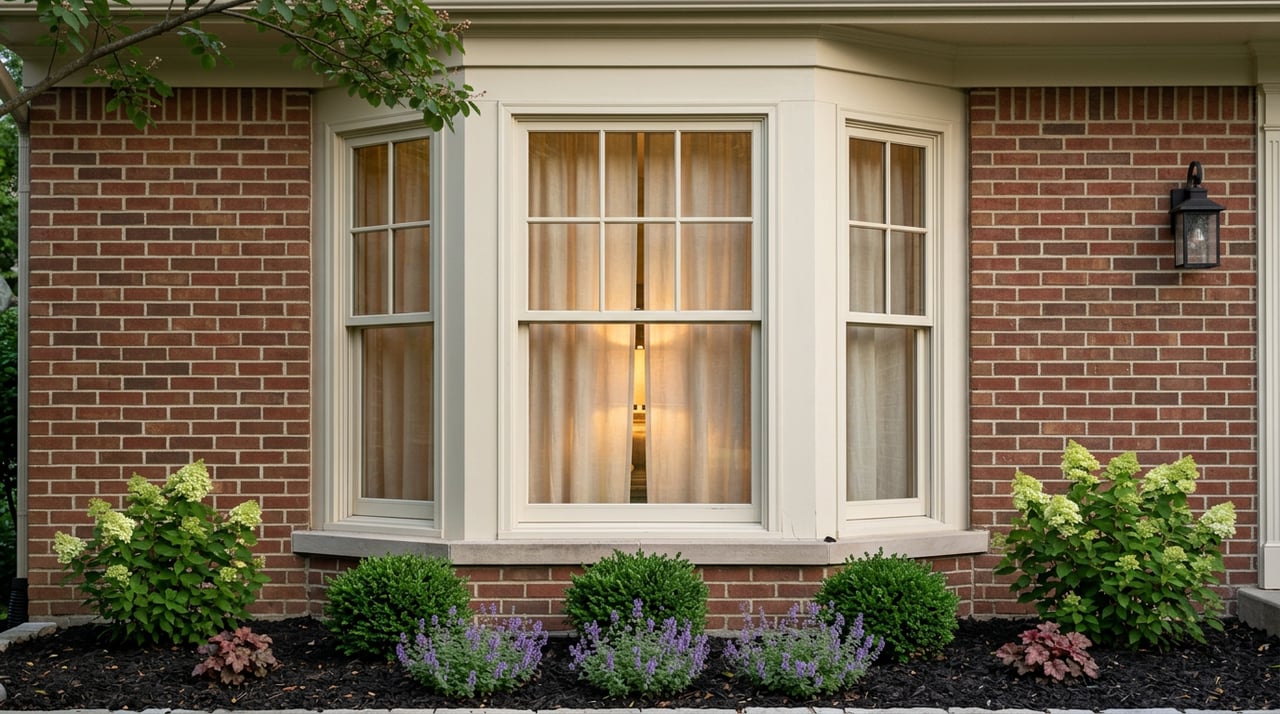
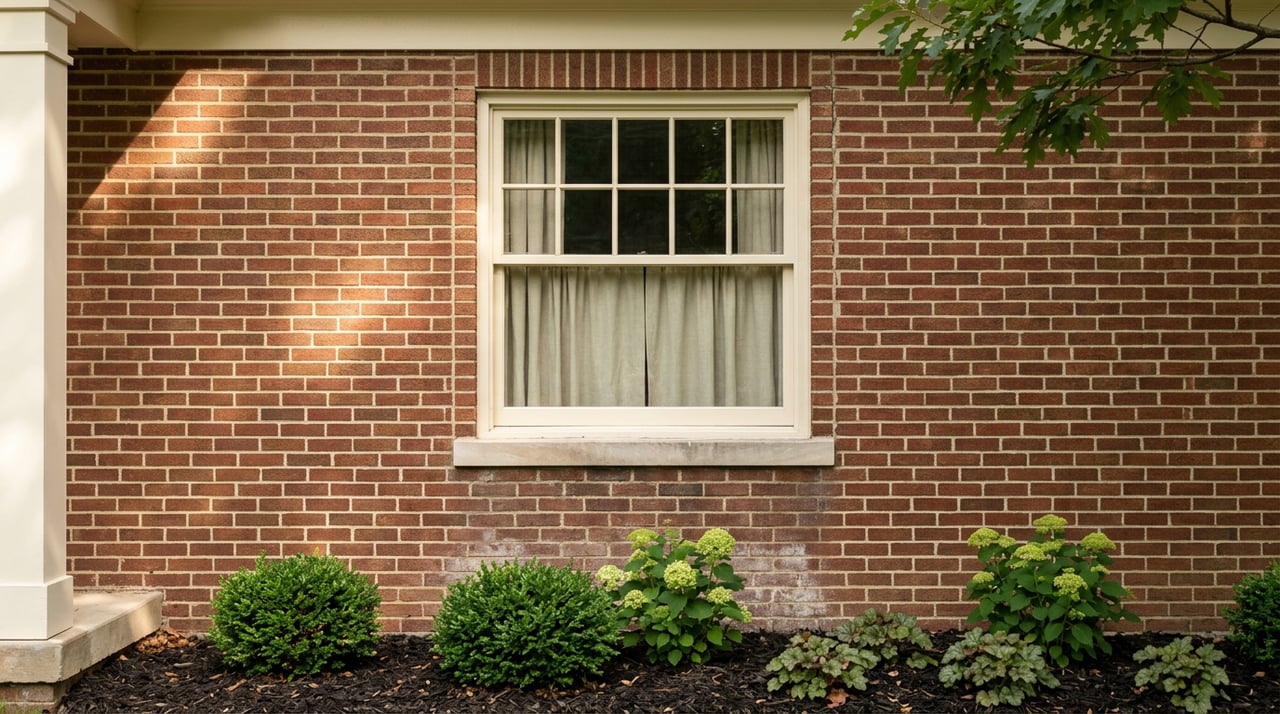
- Windows. Original single-pane wood sash that reads as charm in the listing photos and as an air-infiltration line item on the utility bill.
- Sewer laterals. Older clay lines from the house to the city main that crack and shift with tree roots, which is why a sewer scope video is standard practice on any MK offer.
- Environmental testing. EPA guidance recommends radon testing given Indiana's elevated radon potential, and pre-1978 homes carry lead-paint disclosure and lead-safe renovation obligations under federal rule.
None of that is a reason to avoid Meridian-Kessler. It is a reason to plan the offer around it. A prepared buyer here walks in with a specialty inspection budget for the sewer scope, the radon test, and, where the visual inspection warrants it, a structural engineer and a chimney sweep. A Hamilton County buyer used to a builder warranty typically brings none of that on the first pass, and the resulting surprise is what turns a well-priced offer into a strained closing.
The IHPC clock that suburban buyers don't see
The other line item that lives outside the portal is timing. Parts of Meridian-Kessler fall within local and National Register historic districts, and Meridian Street between 40th Street and Kessler Boulevard has been on the National Register since 1986. By 2006 the neighborhood counted more than 250 homes designated by the National Register as culturally or historically significant.
For a buyer, the practical consequence is that exterior modifications to contributing structures can be subject to Indianapolis Historic Preservation Commission review before a window replacement, porch rebuild, or addition can proceed. That review is not a barrier so much as a calendar. It changes how you sequence a renovation, which contractors you interview, and what a realistic first-summer punch list looks like after closing. A buyer who plans to swap 40 wood sash windows for aluminum-clad units the month after moving in should confirm the property's district status before that plan is priced into the offer, not after.
None of this shows up in a Zestimate. All of it shows up in your first year of ownership.
What that $475,000 buys above ground
The reason buyers still pay the premium is that Meridian-Kessler delivers something no Hamilton County subdivision built in 1997 can approximate: a walkable, tree-canopied grid where the daily errands happen on foot or on the Monon.
Along College Avenue and at the neighborhood retail node near 49th and Pennsylvania, residents rely on Café Patachou, Hubbard & Cravens for coffee, The Jazz Kitchen for intimate performances and Creole-inspired menus, Mama Carolla's for Italian, the Aristocrat Pub & Oxford Room for casual British fare, Root & Bone for elevated comfort food, and the cash-only Red Key Tavern. The Monon Trail marks the eastern boundary and runs uninterrupted north to Carmel and south to downtown, which means a family bike ride can end at either Newfields or a downtown ballgame without a car. The MKNA Home & Garden Tour runs each spring as the neighborhood's on-ramp for people who want to see the interior architecture that the streetscape only hints at.
Just north, Broad Ripple's 2026 pipeline keeps refreshing the reasons to stay in Midtown rather than migrate north. Recent and coming openings include Birrieria Iturbidense's brick-and-mortar at 823 Broad Ripple Ave, Clayton Anderson's country-themed Clayton's Ripple Rodeo at 812 Broad Ripple Ave, Filigree Bakery's storefront at 6331 Carrollton, and the Social Cantina Broad Ripple location that arrived late 2025. That corridor is not without its own story, with well-documented streetscape and storm-drainage reconstruction on Broad Ripple Avenue and empty core storefronts through the construction window, but the food-and-drink density inside a fifteen-minute walk of MK's northeast quadrant is not a comparison Hamilton County offers at any price point.
The Hamilton County trade, priced honestly
Set $475,000 side by side. In Meridian-Kessler you get a 1920s home on a leafy grid, an inspection stack that assumes clay laterals and knob-and-tube, an IHPC review calendar on the exterior, walkable access to a dozen named restaurants and the Monon, and a market that moves quality inventory in under a month. In a comparable Westfield or Carmel new build you get modern systems under warranty, standardized HVAC and insulation, no historic-district clock, a garage and yard sized for family logistics, and a drive to reach almost any restaurant on the list above.
Neither is the right answer in the abstract. The right answer depends on whether the buyer's honest budget can absorb, in the Meridian-Kessler case, a reserve of roughly one to two percent of purchase price per year for deferred systems on top of the standard maintenance line, and whether their renovation ambition is compatible with a review process on the exterior. Buyers who can price both are the ones who close on MK without the second-year regret. Buyers who cannot are usually happier in Hamilton County than they expect to be.
Frequently asked questions
Is Meridian-Kessler always more expensive than Broad Ripple? On the median, yes. In the February 2026 Redfin snapshots widely cited by outside brokerages, MK sat at $475,000 against Broad Ripple's $314,100. Broad Ripple's mix includes more condos, townhomes, and smaller bungalows, which pulls its median down and gives that neighborhood more entry points.
Do I have to worry about IHPC review on every MK house? No. Review applies to contributing structures inside designated local historic districts. Confirm the specific property's status before assuming either way, ideally during your offer window rather than after closing.
What specialty inspections should I plan for on a pre-1940 home here? At minimum, a sewer scope and a radon test. Add a chimney inspection where masonry chimneys are present, a structural engineer where foundation or framing findings warrant it, and lead-safe renovation planning for any pre-1978 work.
How competitive is the market right now? MK inventory sat at 48 active listings with a 36-day average days-on-market as of the June 26, 2026 MLS snapshot, against a 16-county central Indiana record median of $323,250 and June closings up roughly 10% year over year. Well-prepared homes still move quickly. Deferred-maintenance homes sit and negotiate.
If you are cross-shopping Meridian-Kessler against a Hamilton County new build and want the reserve fund priced honestly before you write an offer, the team at Midtown Home Collective works both sides of that decision every week. Schedule a free consultation and we will walk through the inspection stack, the review calendar, and the numbers that decide the trade.