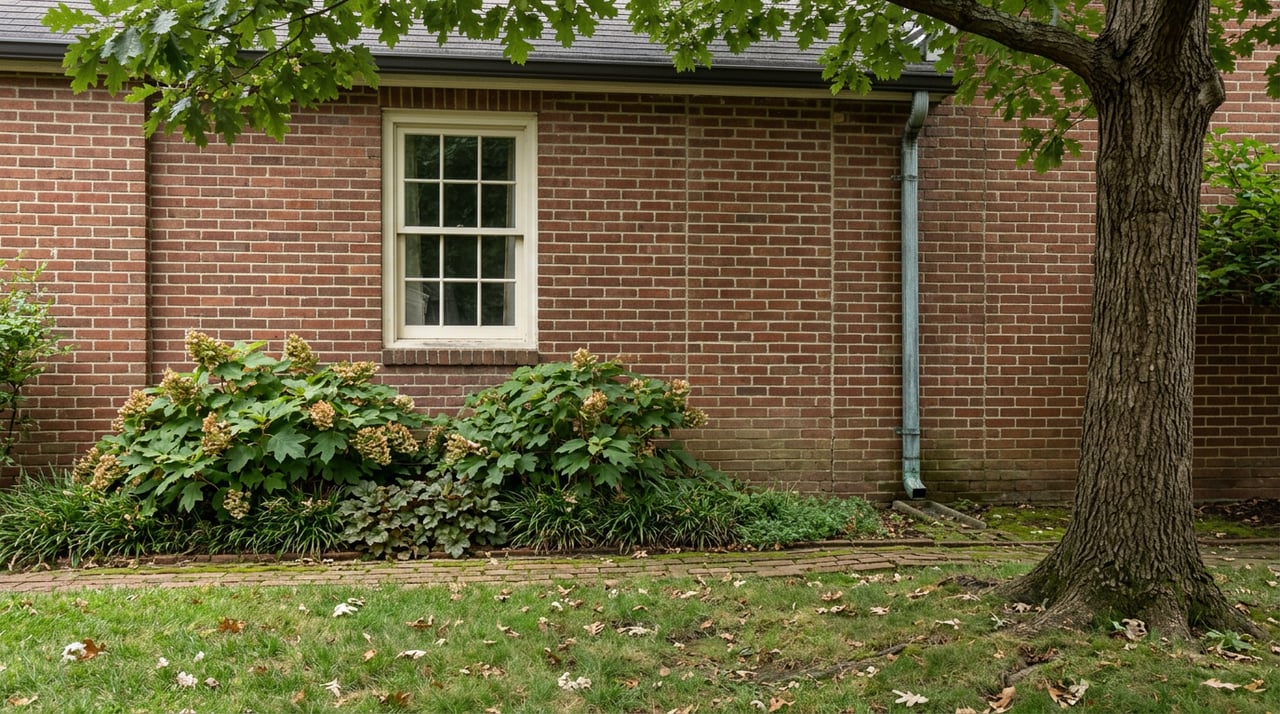
A home inspector in Zionsville's Village finds a septic system the way inspectors always do: a soft spot in the yard, a slow drain, a tank that hasn't been pumped in longer than anyone can remember. In most towns, that finding leads to a routine conversation about repair costs and maintenance schedules. In Zionsville, it leads somewhere else entirely. Once sanitary sewer service reaches a property, the Boone County Health Department will not approve full replacement of that failing septic system, though minor repairs are reviewed case by case. If the system needs more than a minor repair, the homeowner may need to connect to sewer.
That single rule is the thing buyers and sellers of older Village homes need to understand before they price anything. It can turn what looks like a deferred maintenance item into a five-figure conversion decision if a system fails and needs more than a minor repair after sewer service becomes available.
What the conversion actually costs
The Town of Zionsville has been extending sanitary sewer mains into older neighborhoods that were built on septic, and its own FAQ page lays out who pays for what. The Town owns and maintains the main line running down the street. Everything from that main to the house, including the grinder pump that most properties need to push wastewater uphill to the connection point, is the homeowner's responsibility.
| Cost item | Who pays | Typical amount |
|---|---|---|
| Grinder pump, plumbing, and septic tank decommissioning | Homeowner, via a licensed contractor | $15,000 to $20,000 |
| Sewer availability fee | Homeowner, paid to the Town at connection | $4,000 |
| Connection permit fee | Homeowner, paid to the Town | $25 |
| Sewer main maintenance | Town of Zionsville | Covered by wastewater rates |
Zionsville Monthly spoke with Danny Gerald Jr., owner of 317 Plumber and Indy Water Heater and Softener LLC, who has been doing this work in the impacted neighborhoods. He described a boring method that avoids full yard excavation wherever possible, so the process does not have to look like construction in the front lawn, though some properties will need excavation points regardless. The Town also requires that any abandoned septic tank be collapsed with rock or sand and filled completely rather than left to rust and cave in later.
These are typical conversion costs, not a bill every homeowner faces when a system fails. Whether they apply depends on the system and sewer availability.
Why "no deadline" is the wrong thing to hear
The Town's FAQ page is honest about the sequencing: there is no deadline for homeowners to connect, and connections can happen whenever the property owner decides. That line reads like breathing room, but it may not help if the system needs more than a minor repair.
The Boone County Health Department's rule sits underneath it. Once sewer service is available to a lot, the county will not approve construction or full replacement of a failing septic system, though minor repairs get reviewed case by case. Gerald put it plainly to Zionsville Monthly: he said he is confident the town will not issue further permits for septic replacement in the impacted areas, and that, when a system needs replacement, the practical choice for property owners is doing the conversion now or waiting until failure makes it an emergency.
For a seller, that means an aging septic system is not a line item you can negotiate around with a credit and a shrug. If it fails during a listing period or during a buyer's due diligence window, the fallback option most sellers assume exists may not be available: county rules block full replacement when sewer service is available, while minor repairs are reviewed case by case. For a buyer, it means the home inspection is not just checking whether the system works today. It is checking how much runway is left before that decision gets made for you.
The town's own numbers say this is not slowing down
This is not an abstract policy footnote. It is playing out in real time. The Zionsville Town Council voted unanimously on December 15, 2025 to move forward with a $9.6 million upgrade to the town's wastewater treatment facility on Starkey Road, with roughly $7 million of that financed through bond debt, according to a presentation from Chris Greisl of Barnes and Thornburg. The scope includes new pumps at the main lift station, upgrades to the Boone Village Lift Station, new headworks at the treatment plant, and a belt filter press replacement, among other items.
A separate proposal that would have let Citizens Wastewater serve as the primary provider for part of the community was tabled while councilors sought outside legal advice, which tells you the town is still actively deciding how its wastewater system gets structured, not just funding upkeep on a settled plan.
The town also raised wastewater rates 28 percent, the first increase since 2010, based on a 2024 rate study. A resident group calling itself the Starkey Neighborhood Action Group has pushed back publicly, raising capacity concerns and floating the idea of routing Zionsville's wastewater to TriCo Regional Sewer Utility instead. In response, Public Works Director Lance Lantz told Current that the plant, built in 1985 and expanded in 2003 to a 2 million gallon per day capacity, currently treats an average of about 1.15 million gallons per day, meaning it runs at roughly half its designed capacity under normal conditions. He also said something that matters more to anyone holding an older Village property: eliminating older septic systems is an explicit town priority, not an incidental side effect of growth.
Put those two facts together. Rates just jumped for the first time in fifteen years, and the town's public works leadership has said out loud that getting septic properties off septic is a goal they are actively working toward. That is not a system winding down. It is a system with fresh funding and a stated direction, which is exactly the kind of momentum that tends to precede tighter enforcement rather than looser deadlines.
A second friction point for anyone renovating before listing
Septic is not the only place an older Village home can run into a rule a newer subdivision never touches. Zionsville's Historic Preservation Commission was established under Ordinance 2022-06, and the town's Historic Preservation Committee has continued working toward formally designating parts of the Village as a Conservation District. Under the ordinance's framework, a district would first require a certificate of appropriateness only for demolition, moving a building, or new construction visible from a public way, with fuller review of exterior changes kicking in once the district is fully established.
The committee has been using the Indiana Historic Sites and Structures Inventory, compiled by the DNR and Indiana Landmarks, to sort out which homes would count as "contributing" and therefore fall under that review. Homes not listed as contributing would not be. If you are planning exterior work on an older Village home before listing it, whether that is a new addition, a rebuild, or anything visible from the street, it is worth checking where that conversation currently stands with the Town before you finalize a scope of work or a timeline.
What this means at the negotiating table
For sellers, the practical move is to find out early whether your address sits in one of the mapped sewer extension areas and, if it does, to have your septic system's age and condition documented before you list rather than after a buyer's inspector finds it. A seller who can say "connected" or "recently converted" is negotiating from a different position than one whose disclosure says "septic, age unknown."
For buyers, the ask is straightforward: request the septic system's service history, ask directly whether the property has sewer availability, and if it does, budget the $15,000 to $20,000 conversion range plus the $4,000 town fee into your total cost of ownership rather than treating it as someone else's future problem. A financing option exists through at least one local lender that has worked with Village homeowners on this exact conversion, which is worth asking about if the timing lands close to closing.
Frequently asked questions
Is connecting to sewer mandatory if my street has sewer service available? There is currently no deadline requiring homeowners to connect, according to the Town's own FAQ. The practical trigger is your septic system's condition: once it fails, county rules block full replacement if sewer service is available to the lot; minor repairs are reviewed case by case.
How do I find out if my property is in one of the sewer extension areas? The Town of Zionsville's Sewer Extension Project page lists the general areas covered by the project. Confirming your specific address is worth a direct call to the Town's Public Works Department before you list or make an offer.
Does the Town recommend a specific contractor for the conversion? No. The Town has said it is not generating a list of approved contractors so as not to endorse any provider over another, and suggests property owners get multiple quotes from licensed local plumbers.
An older Village home carries a character that new construction can't fake, but that character comes with a cost structure a newer subdivision simply does not have. Knowing which bill is coming, and why the town's own momentum suggests it is not going away, is the difference between a smooth transaction and an expensive surprise at closing. If you are weighing a purchase or a sale in Zionsville's Village and want a clear-eyed read on what a specific address is dealing with, Midtown Home Collective is glad to walk through it with you. Schedule a free consultation and let's get the full picture before you write the offer or sign the listing agreement.
This article is general information, not legal, tax or financial advice. Consult a qualified professional about your situation.